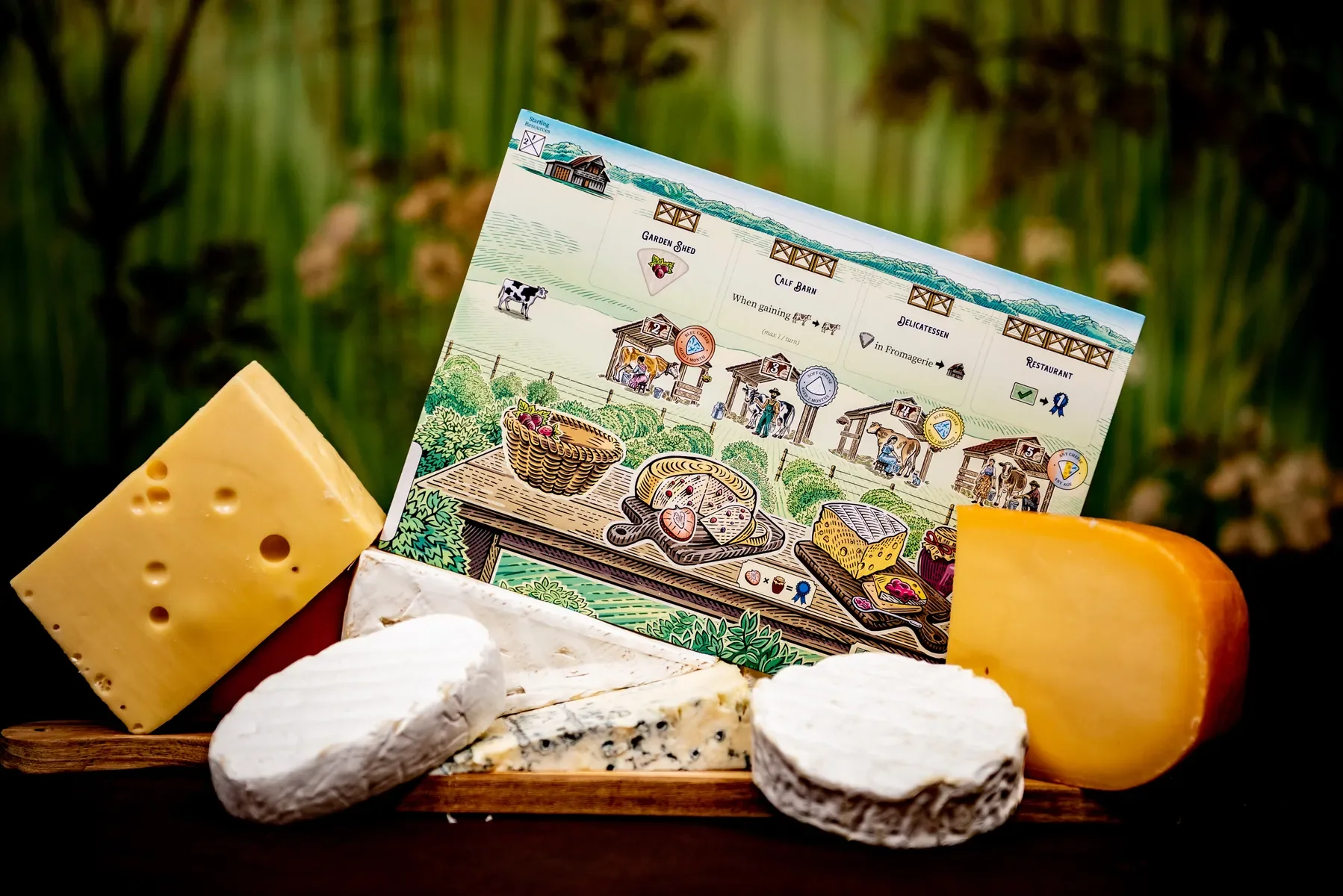
OUR PROCESS
Give Your Game a Clear Direction
Great games include 3 main ingredients
Understanding how they work together will help you explore what’s possible and choose a game concept that fits your goals.
You don’t need to have it all figured out. We’ll guide you through the choices and turn them into a game your audience will love.

Audience

Theme

Mechanics
Audience: Who will play your game?

When you think of your brand’s audience, who do you see around the table?
1. Families with kids and grandparents
Simple, fun strategy games to bring generations together
2-6 players | Ages 8+ | 20-45 minutes
2. Large groups at a party
Quick to learn games to get everyone engaged
6-12 players | Ages 14+ | 10-30 minutes
3. Smaller groups who love a challenge
Immersive strategy games that reward planning and tactical decisions
2-5 players | Ages 14+ | 45-90 minutes
Theme: What’s Your Game About?
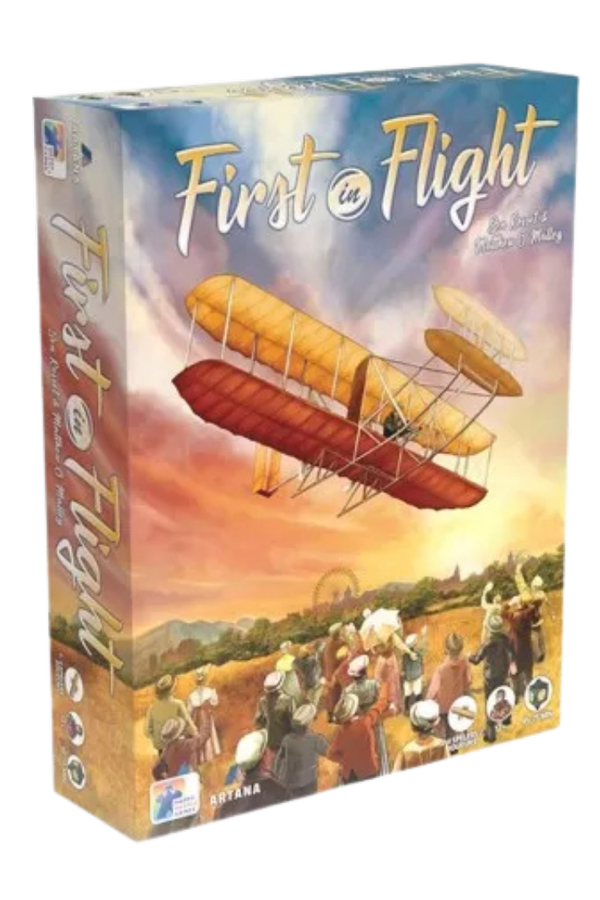
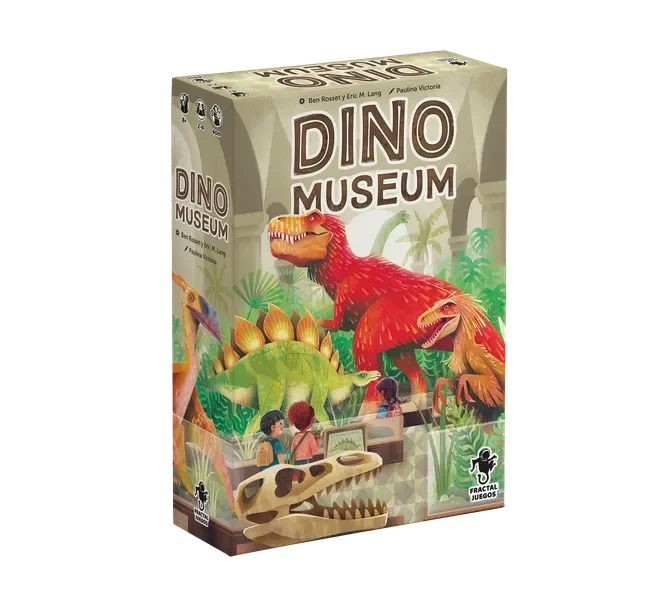
First in Flight and Dino Museum designed by Ben Rosset
The theme is the world, story, or experience that brings your game to life. What do you envision for your brand?
1. Put the players in charge
Players build their own theme park, explore local attractions, or route a tour
Great for attractions, destinations, museums, tourism, and consumer brands
2. Give players a mission
Players rally a community, protect endangered animals, or cure a disease
Great for nonprofits, educational institutions, and mission-driven brands
3. Just make something fun!
Not every game needs to teach a lesson or tell a complicated story
Great for retail products, corporate gifts, promotional campaigns, and lifestyle brands
Mechanics: How will it play?
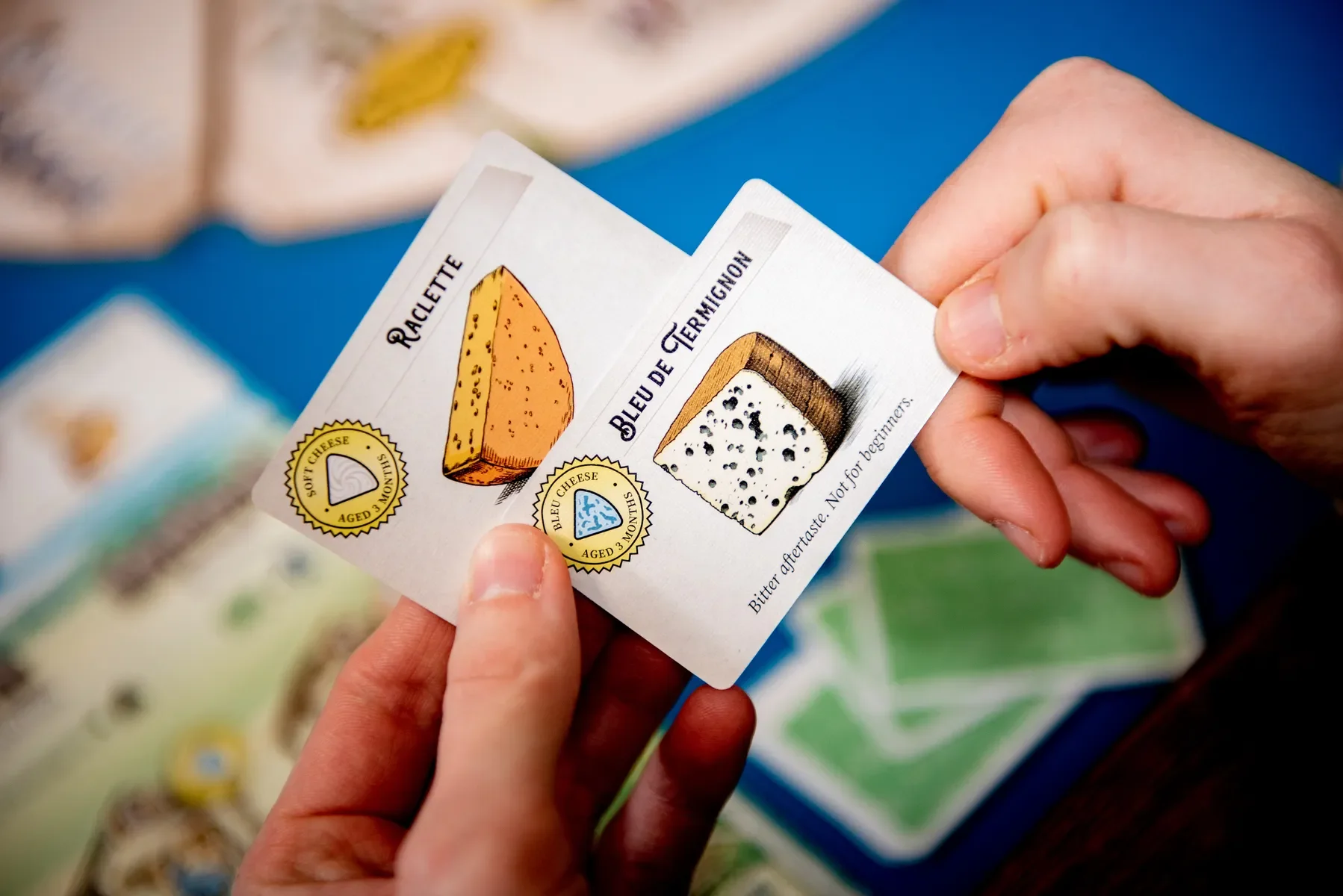
Fromage, by Ben Rosset, gives players wonderful decisions and possibilities for what strategies they’ll choose each time they play.
We’ve got this. Our team develops your game with mechanics that best fit your game theme and audience.
1. Collect and build
Gather resources, complete sets, create something amazing!
Uses goal-setting, resource management, and multiple ways to win
2. Explore and compete
Discover new things, make clever decisions, race to win!
Uses strategy and tactics with adventure and storytelling
3. Deduce and solve
Find clues, make connections, and crack the mystery!
Uses logic, observation, and creative thinking